When summer yields its heavy, sun-ripened bounty, the quest for the most efficient watermelon canning recipes begins. Most people see a watermelon and think only of the cold, dripping red flesh, but the true culinary treasure lies in the often-discarded rind. Transforming these sturdy green rinds into translucent, jewel-toned pickles is an exercise in culinary alchemy that has graced pantry shelves for generations.
This recipe isn’t just about preservation; it’s about elevating a “waste” product into a sophisticated, spice-forward condiment. Imagine a crisp rectangle of rind, glowing with a luminous, pale-green light, infused with the warmth of cinnamon and the exotic hum of star anise. It is the perfect marriage of sweet, sour, and spice, capturing the very essence of a bright, airy summer afternoon in a vintage mason jar.
Whether you are a seasoned canner or a curious novice, mastering watermelon canning recipes allows you to extend the fleeting joy of summer well into the colder months. These pickles offer a unique crunch that mimics a firm cucumber but with a structural integrity that stands up beautifully to the pickling process. They are the ultimate addition to any charcuterie board or a surprising topping for your favorite summer dishes.
The Allure of Luminous, Jewel-Like Summer Preserves
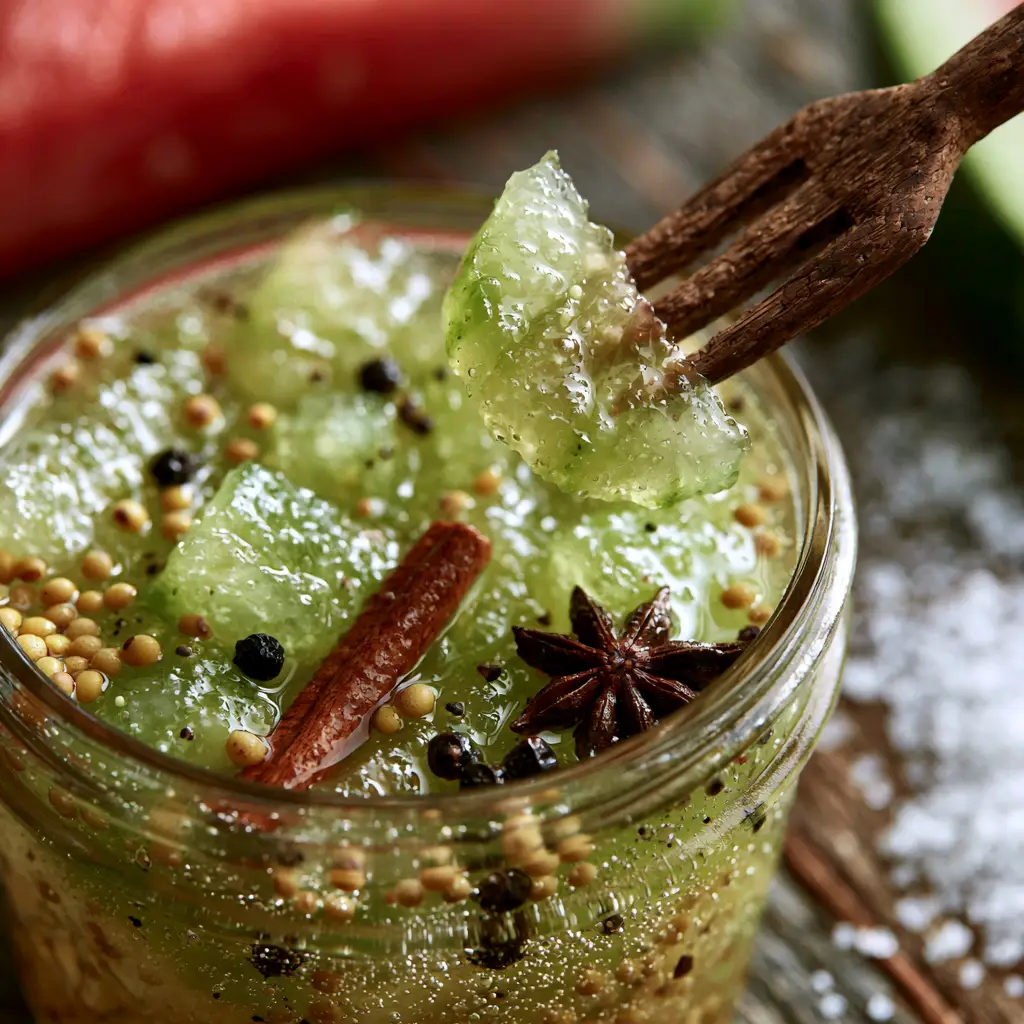
What sets this specific entry among watermelon canning recipes apart is the meticulous attention to texture and visual clarity. By following this forensic-level guide, you will achieve a result that looks as stunning as it tastes. The final product should be so clear you can see the individual mustard seeds dancing in the brine.
- Unmatched Texture: These rinds maintain a crisp, firm edge that provides a satisfying “snap” when bitten into, thanks to a specific sea salt soaking technique.
- Visual Brilliance: The rinds transform from opaque white to a translucent, jewel-like pale green, catching the light like stained glass inside the jar.
- Complex Spice Profile: We move beyond simple vinegar and sugar, incorporating whole star anise and cinnamon sticks for a deep, aromatic fragrance.
- Sustainable Elegance: This recipe perfectly complements other creative leftover watermelon recipes, ensuring that not a single part of your summer fruit goes to waste.
The Foundation: Elements for the Perfect Spiced Pickle
To achieve the high-end food blog aesthetic and the precise flavor profile required, each ingredient must be selected for its functional and visual contribution. We do not use ground spices here, as they would cloud the sparkling brine we are aiming for.
Peeled Watermelon Rind: You will need about 8 cups (approx. 1.2kg) of rind, cut into uniform 1-inch (2.5cm) rectangles. The uniform cut ensures even cooking and a professional, organized look within the glass jar.
Clear White Vinegar: Use a vinegar with at least 5% acidity to ensure safety in your watermelon canning recipes. White vinegar is preferred over apple cider vinegar to keep the brine crystal clear and the rinds looking luminous.
Granulated Sugar: 4 cups (800g) of sugar provide the “candying” effect. This high sugar concentration is what replaces the water in the rind cells, creating that sought-after translucency.
Whole Cinnamon Sticks: Two large sticks provide a woody, sweet heat without darkening the brine significantly. They also look beautiful tucked against the side of the vintage glass.
Star Anise Pods: These provide a subtle licorice note and a striking visual element. One pod per jar is enough to infuse the brine with a sophisticated floral aroma.
Yellow Mustard Seeds: These add a tiny pop of texture and a mild, earthy spice. They tend to settle at the bottom or float elegantly, adding to the rustic, handcrafted charm.
Black Peppercorns: Essential for a biting counterpoint to the sugar. Use whole peppercorns to maintain brine clarity and provide small bursts of heat.
Sea Salt Flakes: Used primarily for the initial “sweat.” This draws out excess moisture, ensuring the rinds remain firm rather than becoming mushy during the boiling process.
Essential Kitchen Gear for Professional Results
While watermelon canning recipes are accessible, having the right tools ensures your safety and the longevity of your preserves. Accuracy in temperature and sealing is the difference between a pantry staple and a spoiled batch.
You will need a large, non-reactive pot (stainless steel or enameled cast iron) to prevent any metallic off-flavors from the vinegar. A Sharp vegetable peeler is mandatory for removing the tough, dark green outer skin without wasting the pale green rind beneath.
Standard canning equipment including a water bath canner, a jar lifter, and a bubble remover tool will make the process seamless. For the most aesthetic result, choose vintage-style wide-mouth mason jars that allow the rinds and whole spices to be clearly visible from all angles.
Mastering the Art of the Watermelon Rind Pickle
The process of watermelon canning recipes is a two-day journey. This patience is rewarded with a superior texture that cannot be rushed. We begin by preparing the “blank canvas” of the rind before infusing it with our aromatic syrup.
Preparing the Jewel-Like Rectangles
Start by slicing your watermelon and enjoying the red fruit. Use a spoon to scrape away every trace of the red flesh until only the white and pale green rind remains. Use your vegetable peeler to remove the hard, dark green skin entirely.
Cut the remaining rind into uniform 1-inch by 1/2-inch (2.5cm x 1.25cm) rectangles. Place these in a large bowl and toss with 1/4 cup (60g) of sea salt flakes. Cover with cold water and let them sit in the refrigerator for at least 6 hours or overnight. This step is non-negotiable for achieving those crisp, firm edges.
Crafting the Sparkling Spiced Brine
After the soak, rinse the rinds thoroughly under cold running water to remove all excess salt. In your large pot, combine 4 cups (960ml) of clear vinegar, 1 cup (240ml) of water, and 4 cups (800g) of sugar. Bring this to a boil, stirring until the sugar is completely dissolved and the liquid is clear.
Add your “visual spices”: the cinnamon sticks, star anise, mustard seeds, and peppercorns. Lower the heat and let the syrup simmer for 10 minutes. This allows the essential oils of the spices to bloom into the vinegar, creating a fragrant base for the rinds.
The Simmer for Translucency
Gently add the rinsed rinds to the simmering syrup. You will notice they are initially opaque and white. Simmer them gently—do not boil vigorously—for about 30 to 45 minutes.
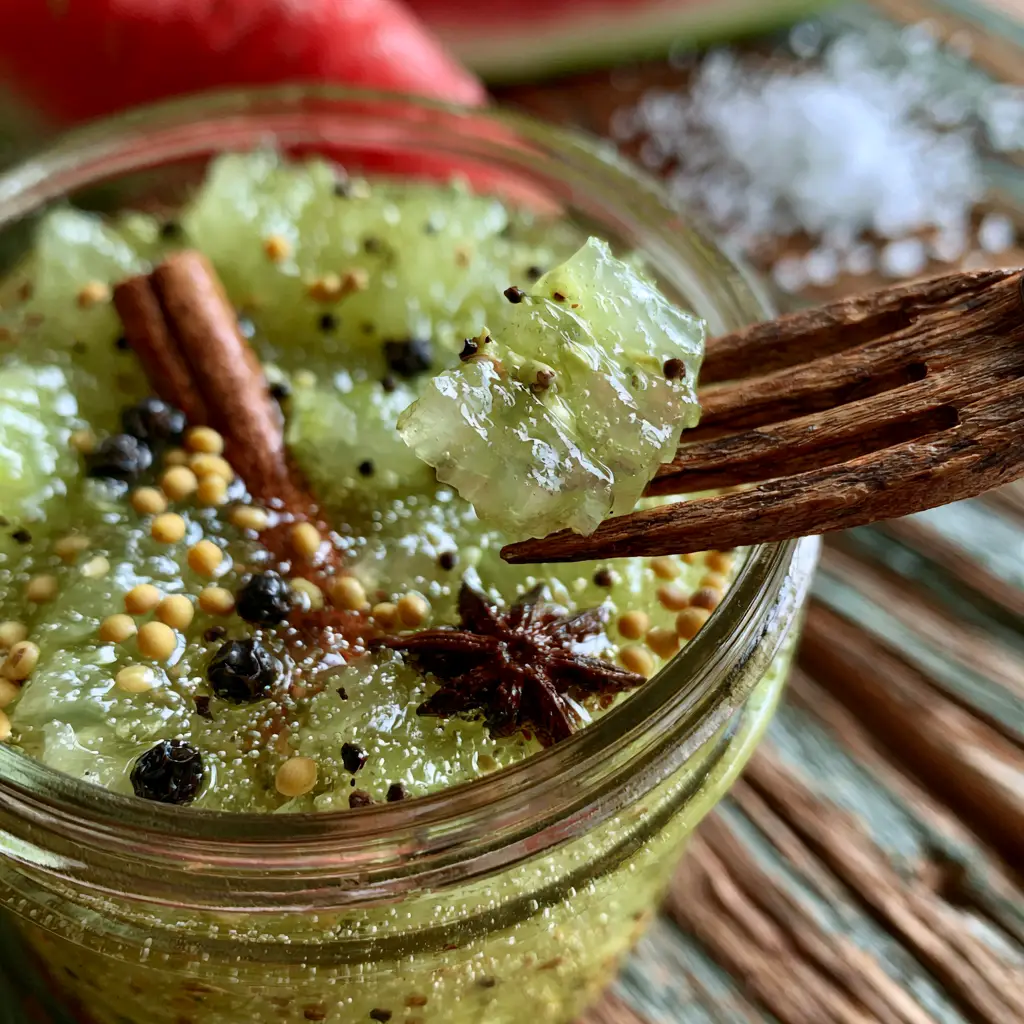
Watch for the sensory cues: the rinds will slowly transform. They will begin to look heavy and sink slightly, and the color will shift to a glowing, translucent pale green. They should look like pieces of sea glass submerged in liquid. Once they are tender but still hold their rectangular shape, they are ready for the jars.
Expert Tips for Canning Perfection
Success with watermelon canning recipes often comes down to the small details that professionals never skip. To ensure your jars are shelf-stable and beautiful, keep these tips in mind.
- Check Your Acidity: Never dilute your vinegar more than the recipe calls for. The 5% acidity is what keeps the pickles safe from bacteria.
- Headspace Matters: Leave exactly 1/2 inch (1.25cm) of headspace at the top of the jar. This allows for a proper vacuum seal to form as the jars cool.
- Remove Air Bubbles: Use a plastic spatula or a dedicated bubble remover to run along the inside of the jar. Trapped air can cause discoloration or spoilage.
- Wipe the Rims: Even a tiny drop of sugar syrup on the rim of the jar can prevent the lid from sealing. Use a clean, damp cloth to wipe every rim before applying the lids.
How to Store and Cure Your Hand-Crafted Jars
Once your jars have processed in the water bath for 10 minutes, remove them and place them on a wooden board or a thick towel. Listen for the “ping” of the lids sealing—a sound of pure victory for any home canner. Let them sit undisturbed for 24 hours.
While it is tempting to open a jar immediately, these pickles need time. Store them in a cool, dark place for at least two weeks before consuming. This “curing” period allows the spices to penetrate deep into the center of the rinds, ensuring every bite is a burst of flavor. Properly sealed jars will last for up to one year in the pantry.
What to Serve With Spiced Watermelon Rinds
These pickles are incredibly versatile. Their sweet-and-tangy profile makes them a natural companion for salty meats and creamy cheeses. They are a staple of Southern hospitality but fit perfectly into modern plant-based vegan summer recipes as a complex flavor booster.
Try dicing them finely and folding them into a refreshing cucumber chickpea feta salad for an unexpected crunch. They also pair exceptionally well with roasted pork or can be served alongside a sharp cheddar cheese. If you have extra watermelon flesh left over, consider making a batch of fruit-forward sides to round out your summer spread.
Frequently Asked Questions
While safe if it has 5% acidity, apple cider vinegar will turn the brine cloudy and the rinds a brownish-yellow. For the luminous, pale-green jewel look, use clear white vinegar.
Yes, for the best texture and shelf stability. The red flesh contains more water and less pectin than the rind, which can lead to a mushy texture if left on during canning.
We recommend a ‘curing’ period of at least 2 weeks in a cool, dark place. This allows the vinegar and spices to fully penetrate the dense rind for a balanced flavor.
If you intend to store the jars on a shelf at room temperature, yes. A 10-minute water bath process ensures the jars are vacuum-sealed and safe from spoilage.
Softness usually occurs if the initial salt soak was skipped or too short. The salt draws out moisture, which allows the sugar syrup to firm up the cell walls during the ‘candying’ process.
The Ultimate Watermelon Rind Pickle Recipe
Watermelon Canning Recipes: The Ultimate Spiced Pickled Rind Guide
Ingredients
Equipment
Method
- Peel the tough green skin from the watermelon rind and remove all red flesh. Cut the white/pale green part into uniform 1-inch (2.5cm) rectangles.
- Place rinds in a large bowl, toss with sea salt, and cover with cold water. Refrigerate for 6-12 hours to ensure a crisp texture.
- In a large pot, combine vinegar, sugar, water, and all whole spices. Bring to a boil, then simmer for 10 minutes until fragrant.
- Add rinsed rinds to the pot. Simmer gently for 30-45 minutes until they turn a luminous, translucent pale-green color.
- Pack hot rinds and spices into sterilized jars. Pour hot syrup over them, leaving 1/2 inch headspace. Process in a water bath for 10 minutes.
Notes
Allow pickles to cure for 2 weeks before eating for best flavor.
A Legacy of Summer Flavors
Mastering watermelon canning recipes is more than just a kitchen project; it is a way to honor the entire fruit and reduce waste in the most delicious way possible. These translucent, glowing rinds are a testament to the beauty of slow food and traditional preservation methods. When you lift a crisp slice out with a cocktail fork, you aren’t just eating a pickle—you’re tasting a preserved moment of summer sun.
If you enjoyed this deep dive into the world of canning, please share your results! Tag your photos with #JuliaFlavor and follow me on Pinterest for more seasonal inspiration. Do you have a favorite spice to add to your pickles? Let me know in the comments below!