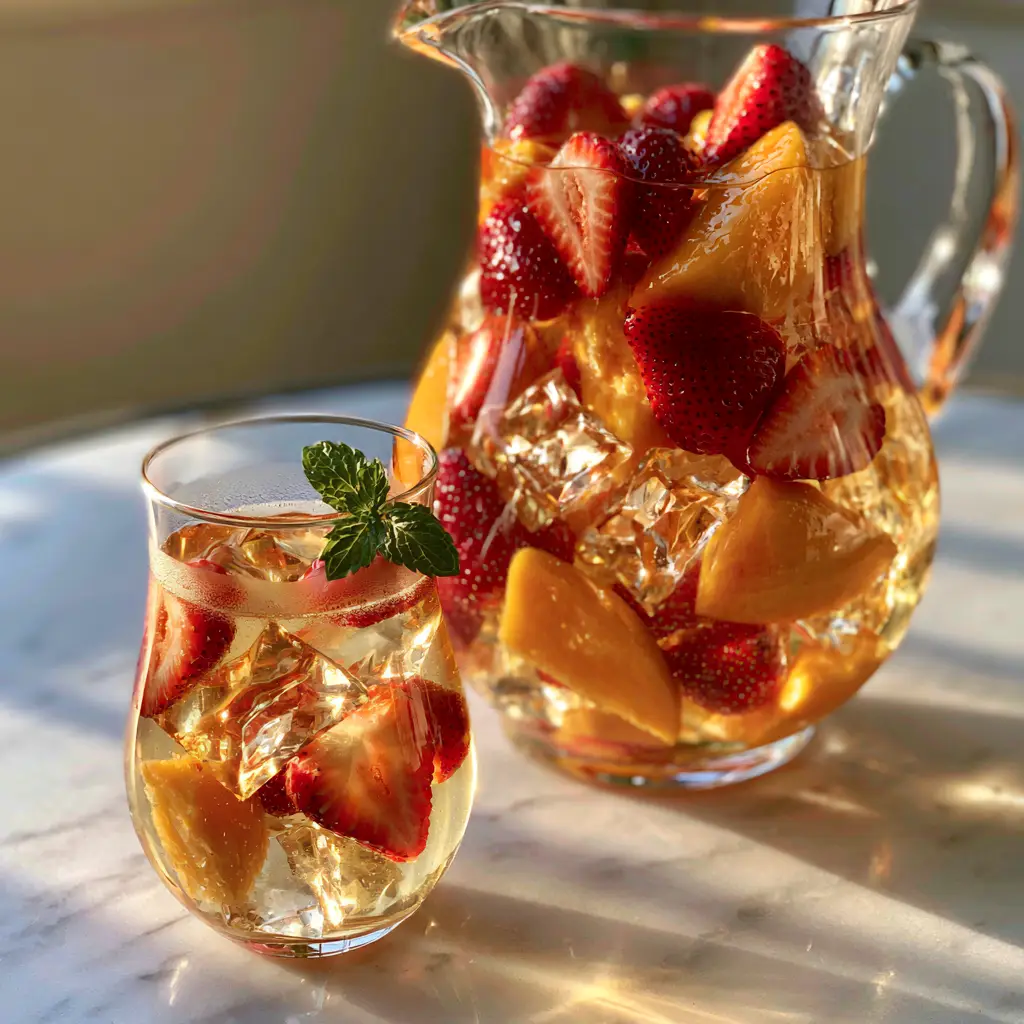
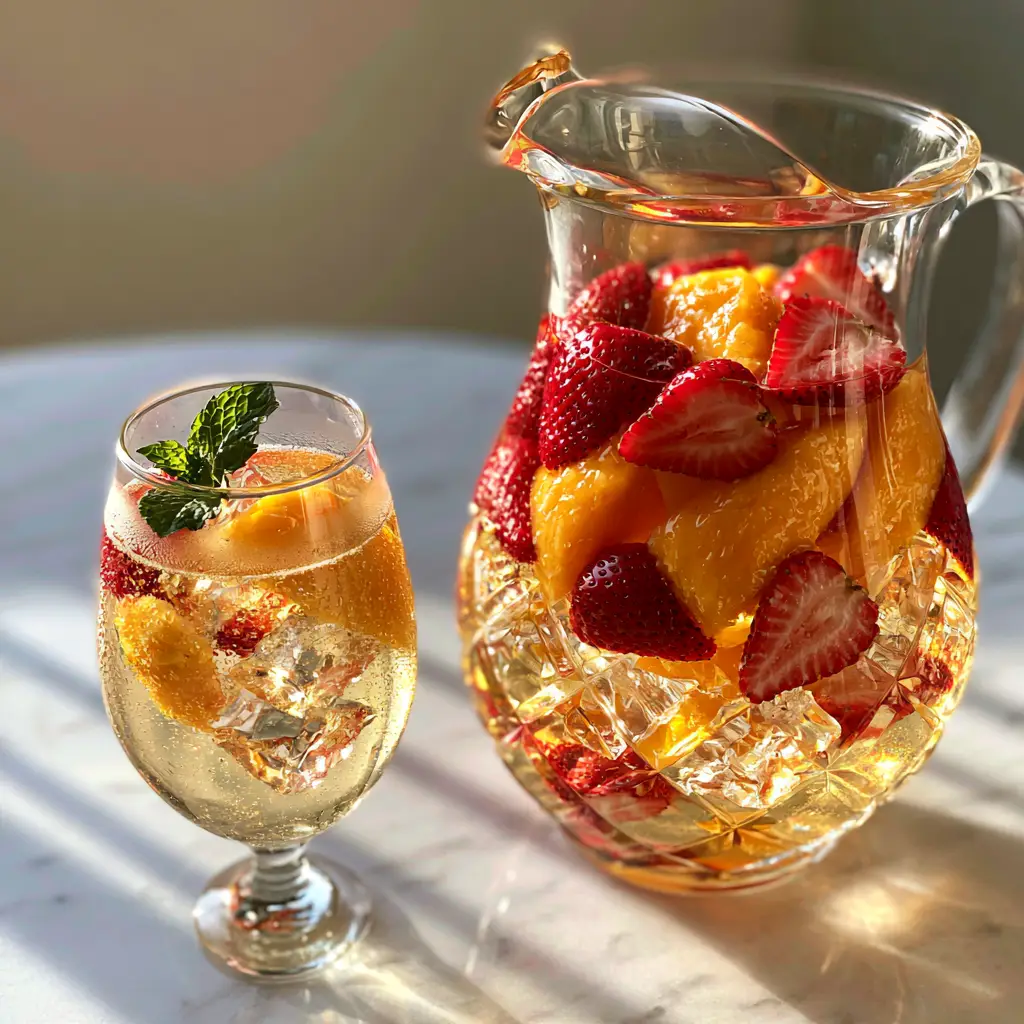
There is nothing quite like the sight of a Strawberry Mango Sangria glowing under the soft, warm light of a golden hour sunset. Imagine a large crystal pitcher, heavy with condensation beads, reflecting the amber hues of a sun-drenched marble patio. Inside, a shimmering, translucent pale gold Moscato dances around vibrant red strawberry halves and juicy chunks of bright orange mango.
This recipe isn’t just a drink; it’s a visual and sensory experience designed for those who appreciate the finer details of a well-crafted cocktail. Whether you are hosting an elegant garden party or looking for the perfect addition to your Easter Sunday brunch, this sangria delivers a sophisticated sweetness that is impossible to resist.
By using a handheld smartphone photo style as our inspiration, we’ve developed a technique that ensures every glass looks as succulent and saturated as a professional editorial shoot. From the jagged clarity of the ice cubes to the emerald green pop of fresh mint, every element is curated for maximum impact.
Why This Shimmering Moscato Blend is the Ultimate Crowd-Pleaser
- Visual Vibrancy: The contrast between the bright orange mangoes and deep red strawberries creates a stunning sunset palette in every glass.
- Effortless Elegance: Moscato provides a naturally sweet, effervescent base that requires less added sugar than traditional dry wine sangrias.
- Textural Harmony: Large, juicy fruit chunks provide a succulent snack at the bottom of the glass, perfectly soaked in floral wine notes.
- Crystal Clarity: Using specific ice techniques ensures your drink stays cold without looking cloudy, maintaining that high-resolution, premium look.
The Essential Components for a Vibrant Strawberry Mango Sangria
Chilled Moscato Wine (750ml / 25oz): Seek out a bottle with notes of orange blossom and peach to complement the tropical fruits. This provides the shimmering, pale gold foundation essential for that glowing visual effect.
Fresh Strawberries (1 lb / 450g): Choose the deepest red berries you can find, as their color will bleed slightly into the wine, creating a beautiful gradient. Slicing them into halves exposes the interior texture, making them look more succulent in the pitcher.
Ripe Mangoes (2 large / approx. 600g): You want mangoes that are slightly soft to the touch but still hold their shape when cubed. Their bright orange flesh provides a stunning color contrast against the strawberries and gold wine.
Orange Liqueur (1/2 cup / 120ml): A splash of Triple Sec or Cointreau adds a necessary structural depth and a hint of citrus bitterness to balance the Moscato’s sweetness.
Fresh Mint Sprigs: These are not just for garnish; they add a cooling aromatic layer that cuts through the sugar. The emerald green color is the “final touch” that completes the tropical visual profile.
Clear, Jagged Ice Cubes: To achieve the reflective quality seen in our visual blueprint, use filtered water to create clear ice. This prevents the “cloudy” look often found in home freezers.
Foundational Ingredient – Simple Syrup (Optional, 2 tbsp / 30ml): Depending on the ripeness of your fruit, a touch of syrup can help macerate the strawberries, drawing out their natural juices faster.
Professional Tools for the Perfect Presentation
To recreate the high-resolution look of a crystal pitcher, you will need a few specific items. A large glass or crystal pitcher (approx. 2-liter capacity) is essential for showing off the fruit layers. A long-handled bar spoon allows you to stir the fruit gently without bruising the delicate strawberries.
For the glassware, choose thin-rimmed wine glasses or elegant tumblers. This helps the “condensation beads” form more predictably on the outside, creating that refreshing, chilled aesthetic. A sharp chef’s knife is non-negotiable for achieving the clean, jagged edges on the mango cubes and the precise strawberry halves described in our visual prompt.
How to Craft the Most Visual Strawberry Mango Sangria
Step 1: Preparing the Fruit for Maximum Saturation
Begin by washing your strawberries in cold water and patting them dry. Hull the berries and slice them vertically into halves; this exposes the beautiful white-and-red interior patterns. For the mangoes, slice the “cheeks” off the pit, score the flesh into 1-inch (2.5cm) cubes, and scoop them out with a spoon. Ensure your cuts are clean and uniform to maintain that professional, high-resolution appearance.
Step 2: The Maceration Process
In your crystal pitcher, combine the strawberry halves and mango cubes. Pour in the orange liqueur and, if using, the simple syrup. Gently toss the fruit to coat it. Let this mixture sit at room temperature for about 15 minutes. This “maceration” technique draws out the juices, ensuring the wine becomes infused with flavor immediately upon contact.
Step 3: Infusing the Shimmering Moscato
Slowly pour the chilled Moscato over the fruit. You will see the liquid take on a pale gold shimmer as the bubbles interact with the fruit juices. Stir once, very gently, using a circular motion from the bottom up. Avoid over-stirring, as we want to preserve the carbonation and the distinct shapes of the fruit chunks. Place the pitcher in the refrigerator for at least 2 hours to allow the flavors to marry.
Step 4: The Final Assembly and Garnish
When ready to serve, fill your glasses with large, clear ice cubes. Pour the sangria, making sure each glass gets a generous serving of both strawberries and mango. The fruit should look saturated and succulent. Top each glass with a tiny sprig of emerald green mint. Within seconds, you should see the thin rim of condensation forming on the glass, signaling the perfect temperature.
Expert Tips for a Picture-Perfect Pitcher
- The Ice Factor: Never add ice directly to the pitcher if you plan on letting it sit, as it will dilute the shimmering Moscato base. Only add ice to the individual glasses.
- Temperature Control: Ensure your wine is thoroughly chilled before mixing. This creates the temperature differential needed for those iconic condensation beads to form on the glassware.
- Fruit Selection: If mangoes are out of season, you can find frozen mango chunks that work well, but for the “succulent and freshly sliced” look, fresh is always superior.
- Managing Sweetness: Moscato varies in sweetness. Taste your wine first; if it’s very sweet, add a squeeze of fresh lime juice to provide a bright, acidic counterpoint.
Storage and Preparation in Advance
This Strawberry Mango Sangria is best enjoyed within 4 to 6 hours of mixing. Beyond that, the strawberries can become overly soft and lose their vibrant red color. If you need to prep further in advance, cut the fruit and keep it in an airtight container, but don’t add the wine until 2 hours before serving.
Leftovers can be stored in the fridge for up to 24 hours. While the fruit will be very soft, the flavor remains delicious. You can even blend leftover sangria with more ice to create a “Sangria Slushie” for a different vegan summer treat.
What to Serve With This Tropical Delight
This sangria pairs beautifully with light, savory dishes that balance its sweetness. It is a natural companion for a summer pasta or a refreshing cucumber chickpea feta salad.
For a party spread, consider serving it alongside a bold cowboy corn dip or a zesty elote pasta salad. The creamy textures of these dips contrast perfectly with the crisp, effervescent nature of the Moscato and the juicy fruit chunks.
Frequently Asked Questions
Absolutely! Replace the Moscato with sparkling white grape juice or a non-alcoholic sparkling cider, and swap the orange liqueur for a splash of fresh orange juice.
Yes, you can use frozen fruit, and it acts like ice cubes to keep the drink cold. However, for the best visual appearance and succulent texture shown in the photos, fresh fruit is highly recommended.
For the best flavor infusion, chill your sangria for at least 2 hours. Avoid going over 6 hours if you want the strawberry halves to maintain their structural integrity and bright red color.
A Moscato or a semi-sweet sparkling wine works best to achieve that shimmering, pale gold translucent look while providing a natural sweetness that complements the mango and strawberry.
Cloudiness usually comes from using low-quality ice or over-mashing the fruit. Use clear ice made from filtered water and stir gently with a bar spoon to keep the liquid translucent.
The Perfect Strawberry Mango Sangria Recipe
Strawberry Mango Sangria: The Ultimate Shimmering Summer Refresher
Ingredients
Equipment
Method
- Clean and slice strawberries into halves; cube mangoes into 1-inch pieces. Place all fruit in a large crystal pitcher.
- Add orange liqueur and simple syrup to the fruit. Let sit for 15 minutes to allow juices to release.
- Pour the chilled Moscato over the fruit. Stir gently with a bar spoon to combine without losing effervescence.
- Refrigerate for at least 2 hours to allow the pale gold wine to absorb the red strawberry and orange mango flavors.
- Fill glasses with clear, jagged ice. Pour sangria over ice, garnish with a mint sprig, and serve immediately to enjoy the condensation beads on the glass.
Notes
Moscato is naturally sweet, so taste before adding extra simple syrup.

Join the Flavor Community!
I hope this Strawberry Mango Sangria brings a touch of golden-hour magic to your next gathering! If you made this recipe, I would love to hear how it turned out. Did you swap the mint for basil? Did you use a sparkling Rosé instead of Moscato? Leave a comment below and let me know!
Don’t forget to follow me on Pinterest for more stunning summer drink inspiration and easy entertaining tips. Happy sipping!